
Project Overview
This project explores the integration of AI generative models into early stage product ideation and their role in accelerating and clarifying the transition to professional 3D production.
The objective was to build a workflow capable of generating consistent footwear concepts from a single sketch and depth reference, iterate rapidly across variations, and then translate one selected concept into a high quality 3D asset suitable for commercial product animation and visualization.
Although developed as a personal project, the approach and presentation were intentionally aligned with real world product visualization pipelines.
Software
Blender
Adobe After Effects
Adobe Photoshop
Adobe Illustrator
Substance Painter

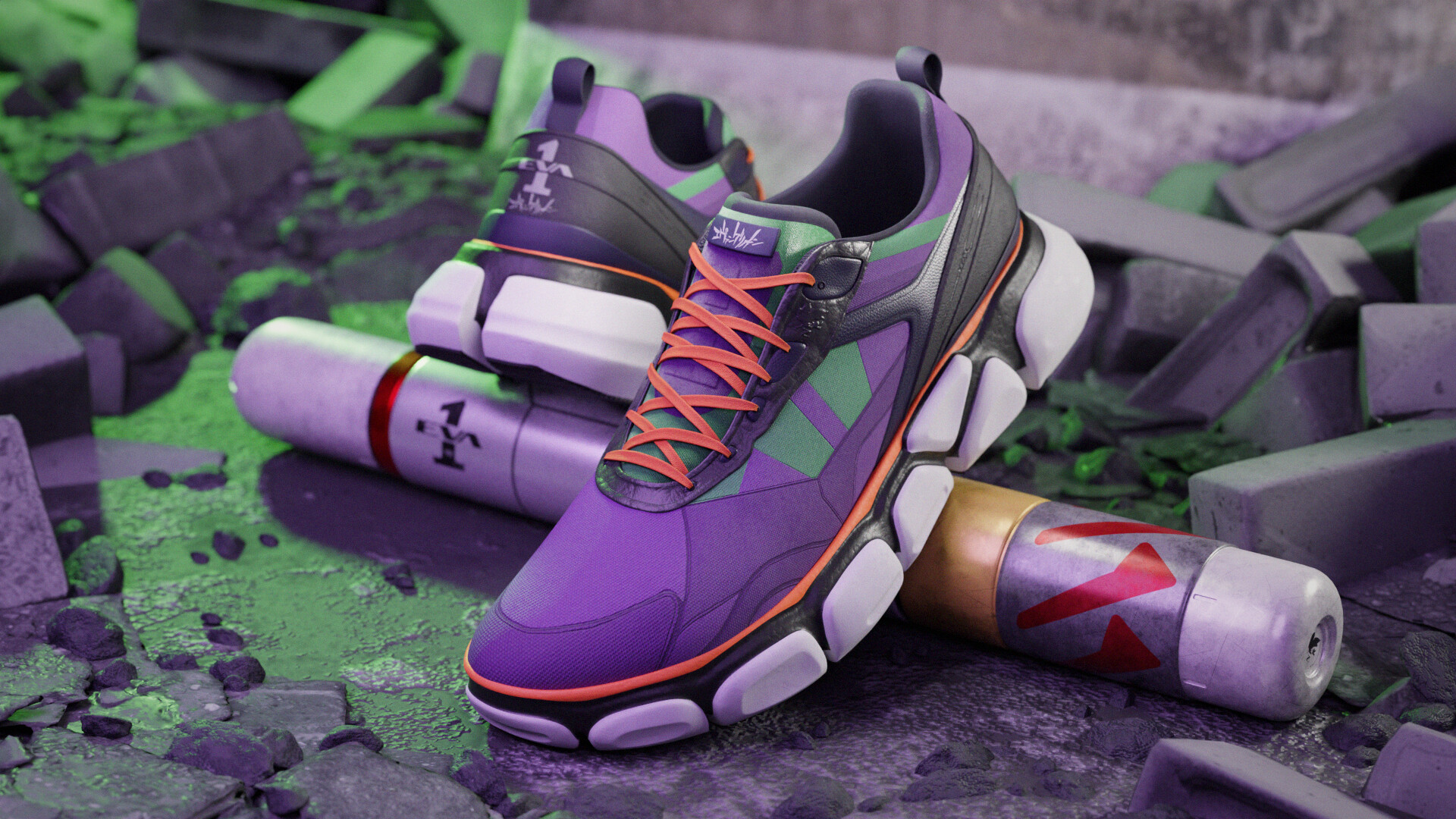

In product focused CGI workflows, early concept stages often introduce ambiguity that slows down later 3D production. Sketches and loose references rarely provide enough spatial or material information to make confident modeling and shading decisions.
This project was an experiment to reduce that gap by using AI as a controlled ideation tool rather than a final output, with the goal of entering 3D production with a clearer and more precise visual target.

AI Driven Concept Development
The project started with local experimentation using ComfyUI and custom AI workflows.
A single source sketch was combined with a depth map to enforce spatial consistency across generations. This setup allowed rapid iteration over multiple design variations while maintaining stable proportions, volume, and overall silhouette.
By constraining the generative process, the results became predictable enough to be evaluated as real design options rather than abstract images.
After extensive iteration, a curated set of AI generated concepts was selected as the foundation for the 3D phase.
Concept Direction
One footwear design was chosen and further developed as a complete product concept.
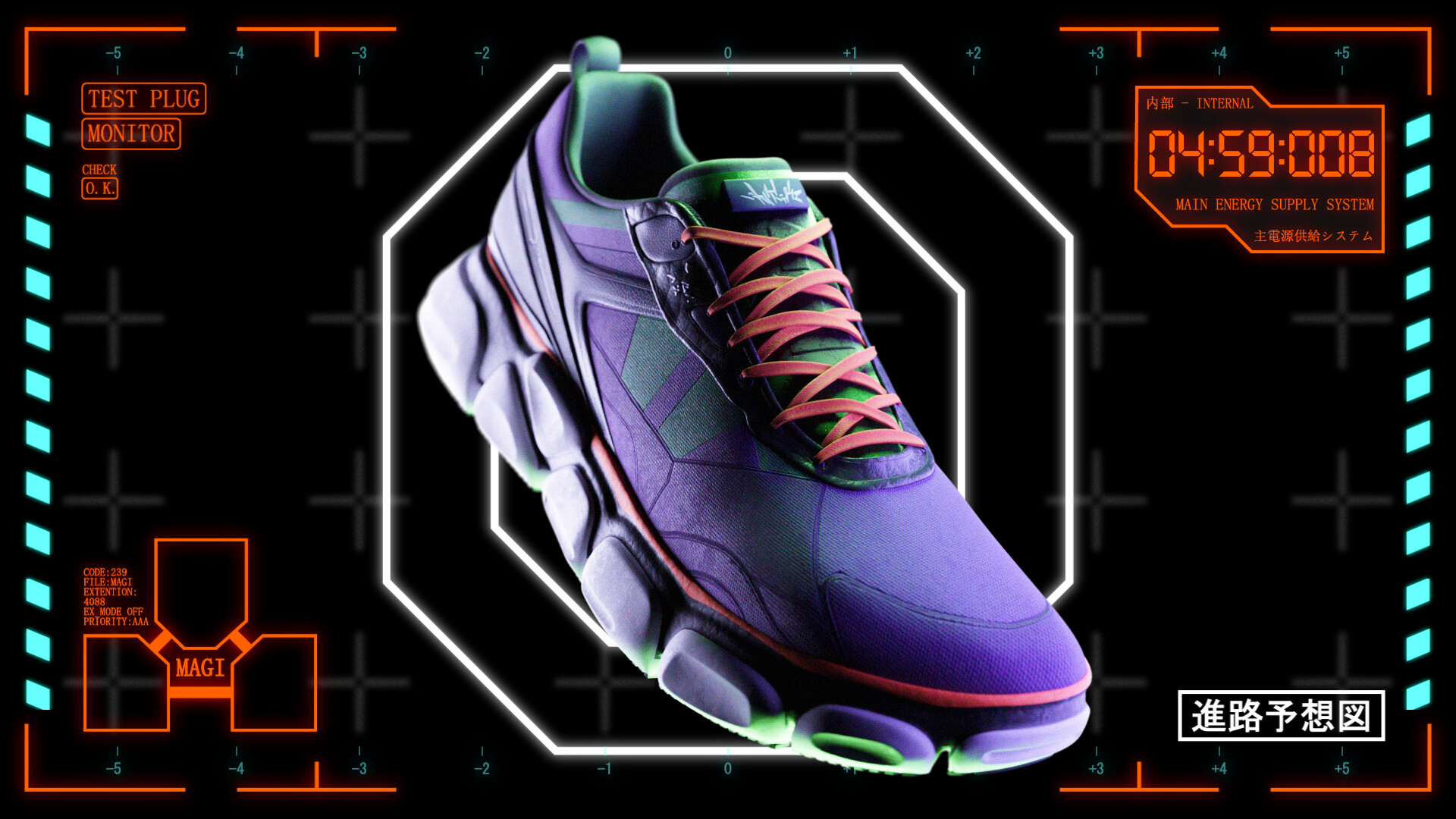
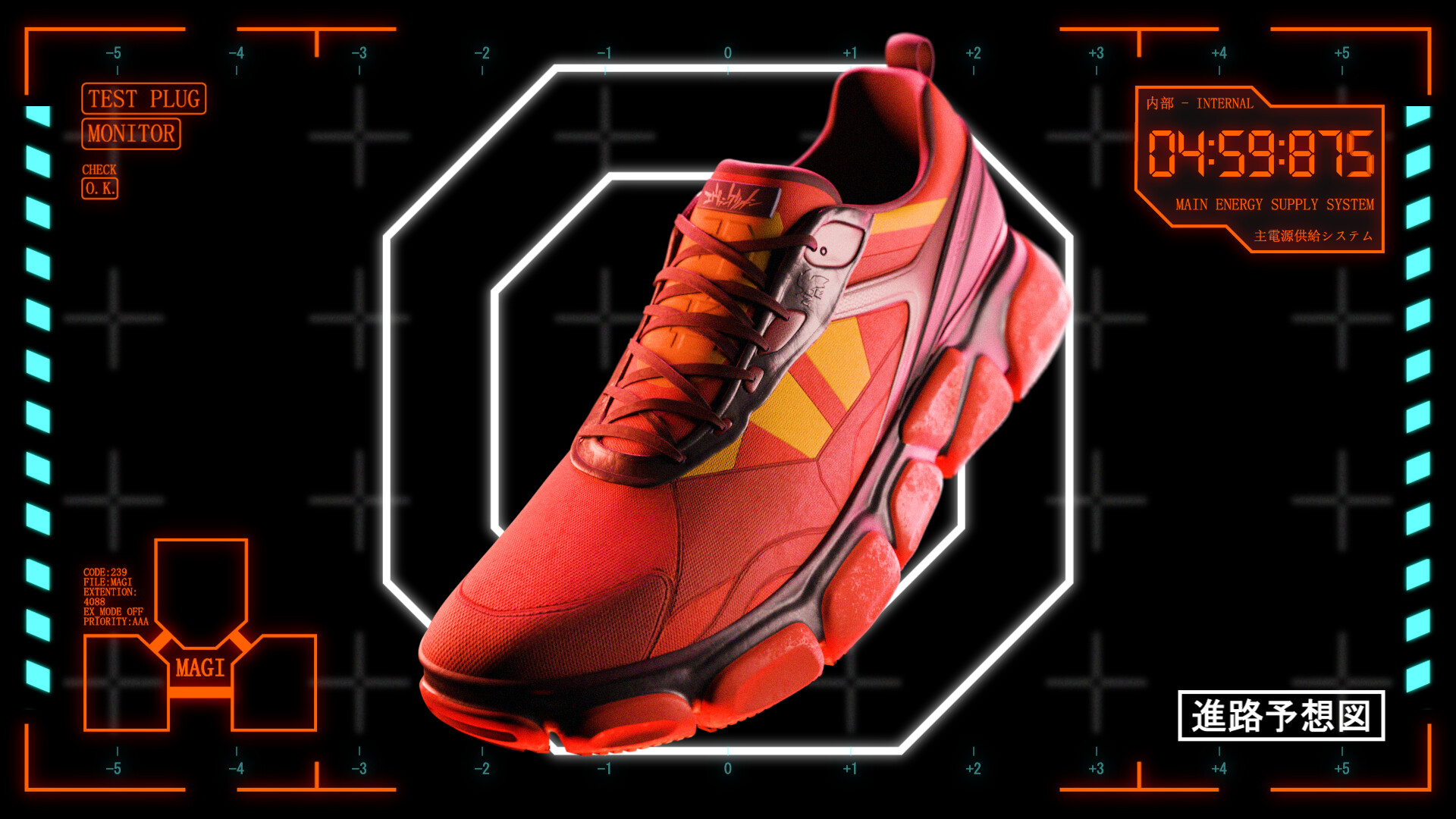
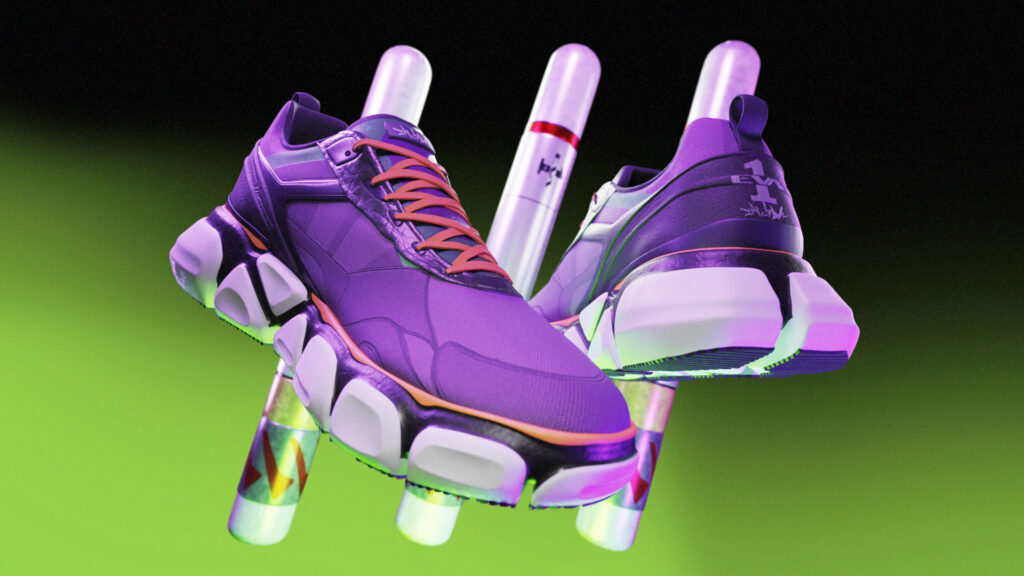
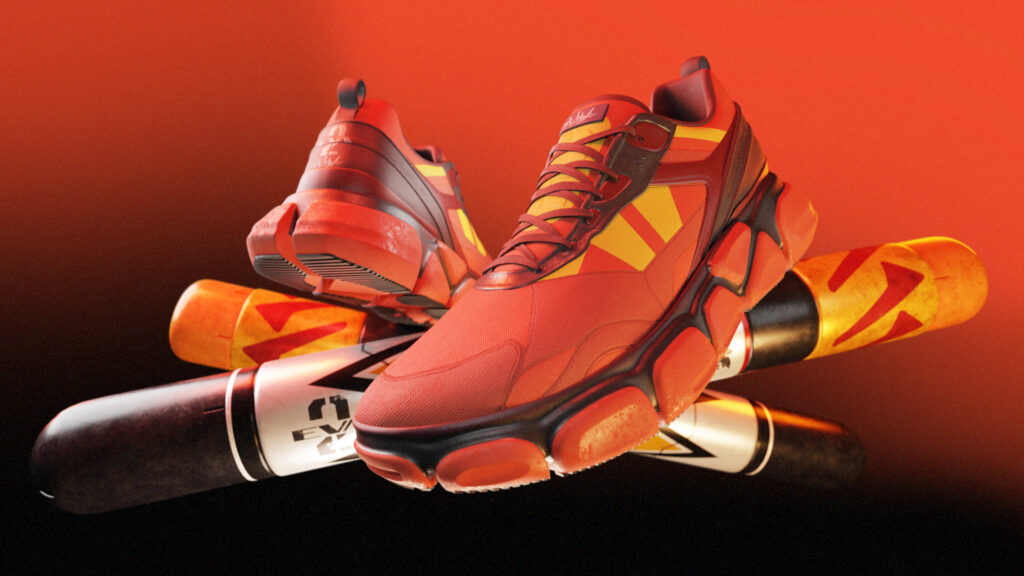
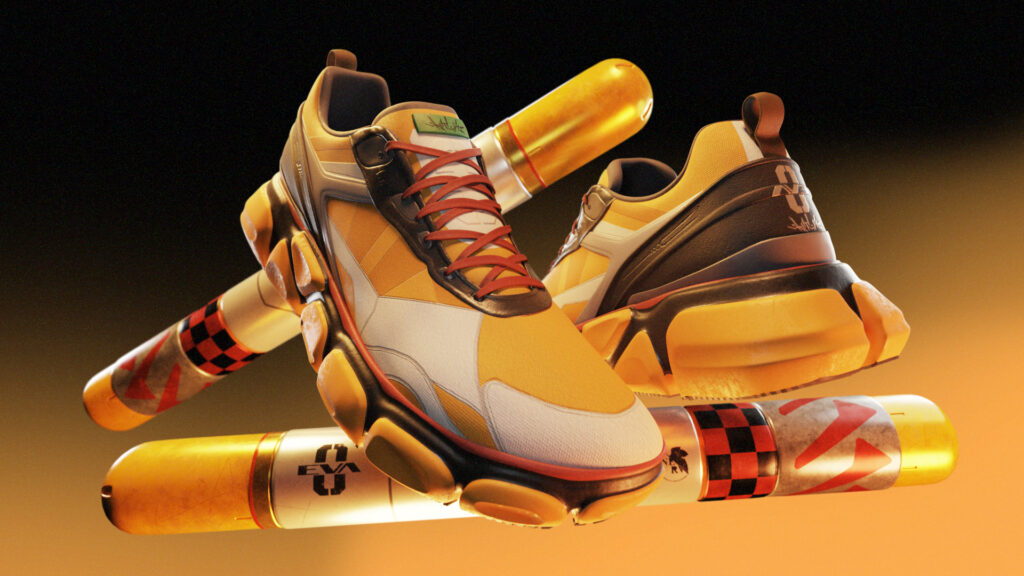
The visual direction was focused on a clean and commercial presentation, while incorporating a technical and graphic aesthetic inspired by Neon Genesis Evangelion. The influence was applied through color language, interface graphics, and visual framing rather than literal references.
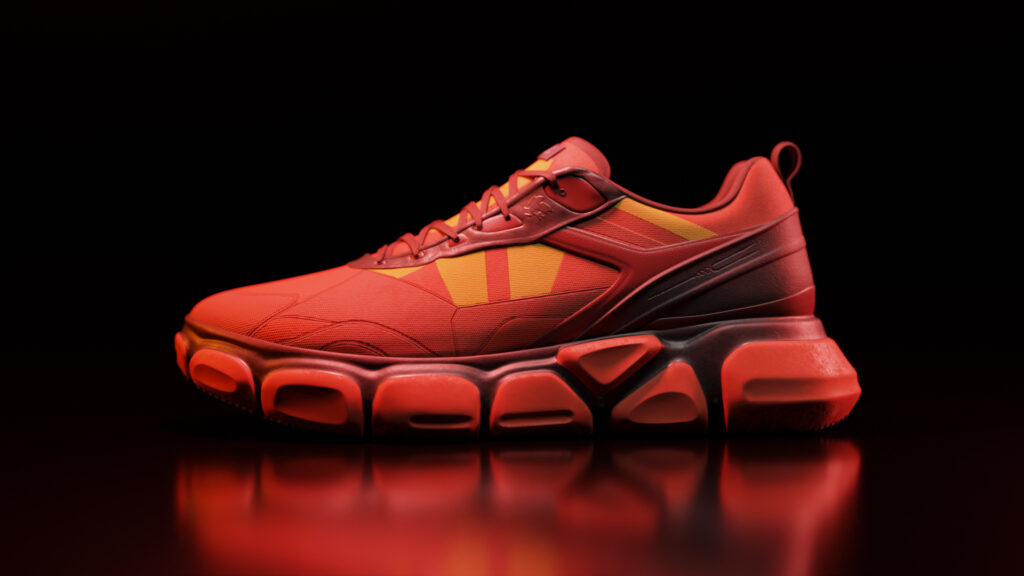
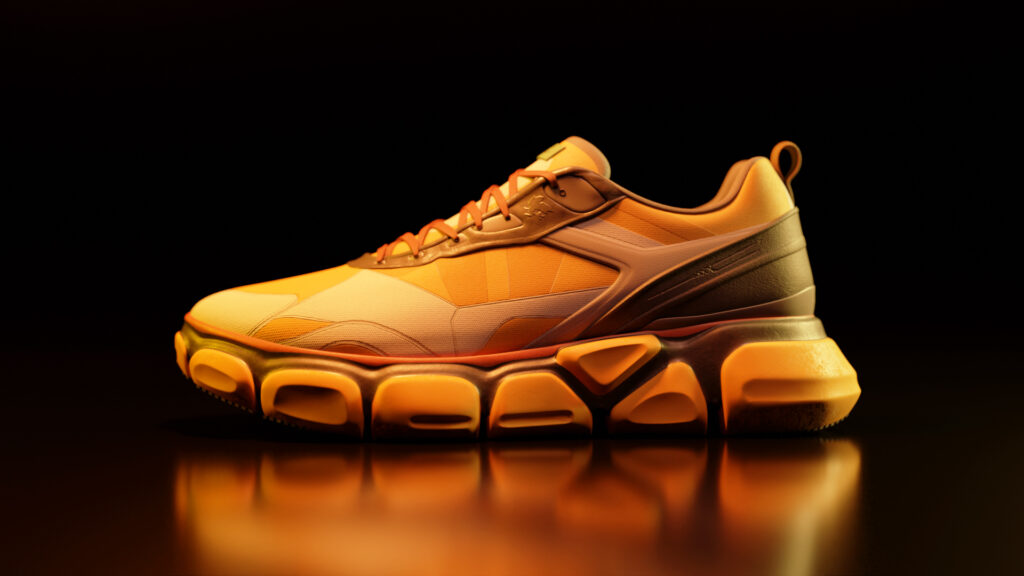
The final concept was developed in three color variants, each referencing one EVA unit. EVA 00, EVA 01 and EVA 02
This allowed the same product design to be explored across different visual identities while keeping geometry and materials consistent.
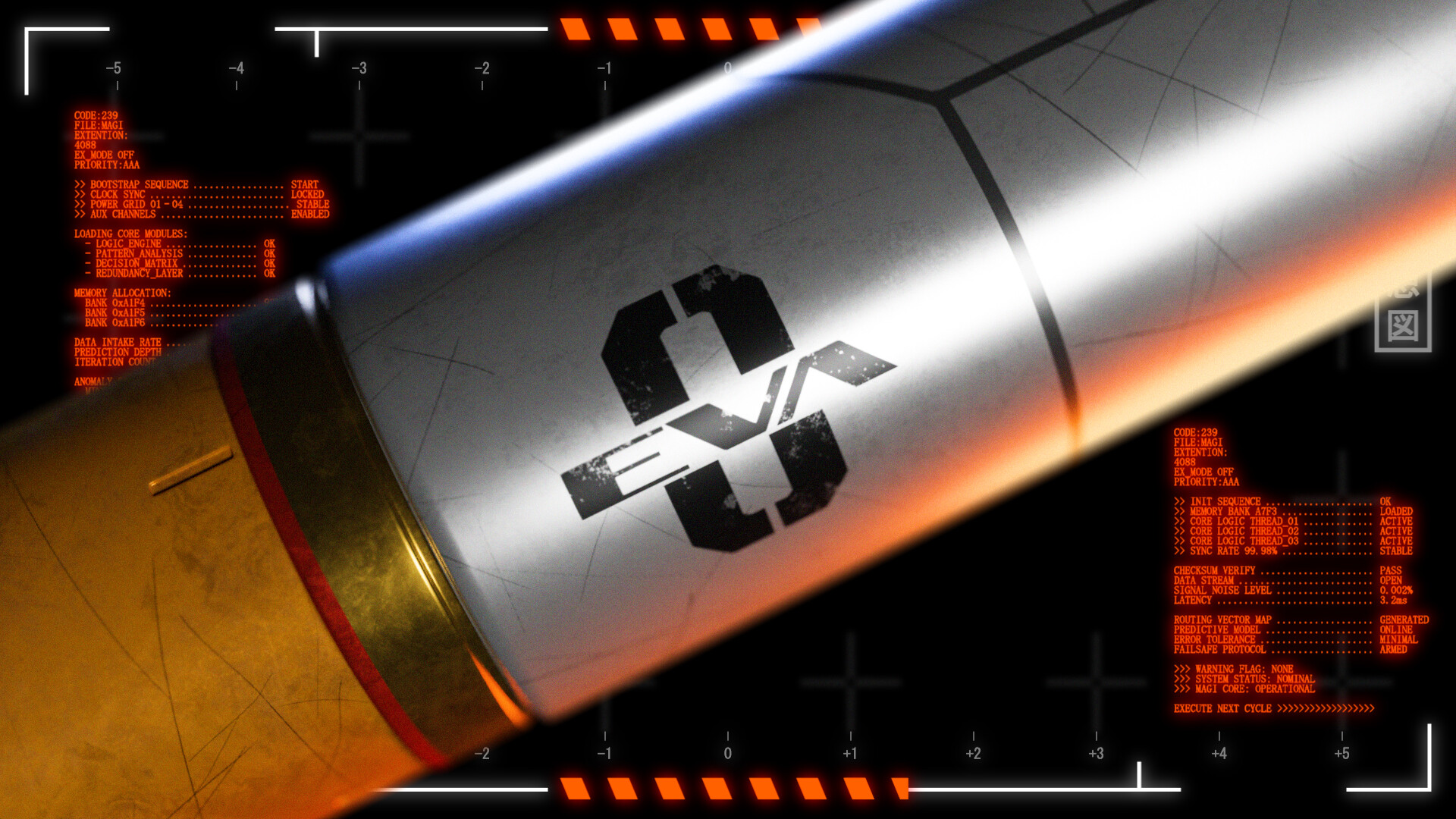


Production Pipeline
Once the concept was locked, all AI outputs were treated strictly as reference material.
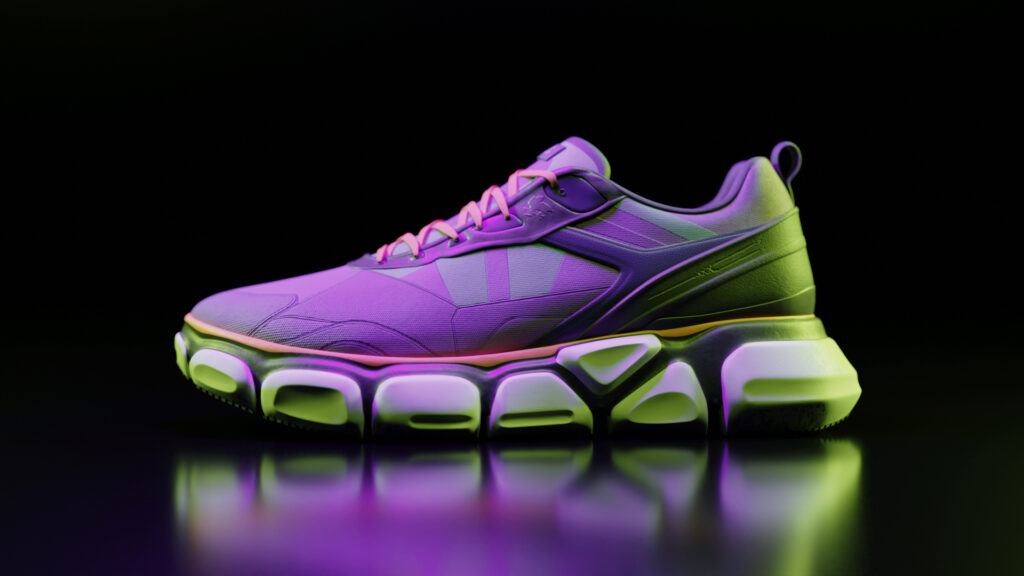
The shoe was fully modeled in Blender, focusing on clean topology and accurate proportions suitable for close up product shots and animation.
Texturing for both the shoe and the environment was done in Substance Painter, with attention to material separation, surface wear, and fabric response under strong lighting.
Lighting and rendering were handled in Blender Cycles, with a focus on controlled highlights, readable silhouettes, and product centered framing. The graphic interface elements and technical overlays were designed in Adobe Illustrator to support the visual narrative and reinforce the technical tone of the project.
Final compositing, color adjustments, and layout were completed in After Effects, where all elements were integrated into a cohesive presentation.
Results
The final result is a product visualization series that demonstrates how AI can be effectively integrated into the ideation phase of a 3D pipeline without compromising artistic control or production quality.
Using AI at the concept stage reduced uncertainty, accelerated design exploration, and provided a more precise visual target for 3D production. This allowed the modeling, texturing, and rendering phases to focus on execution and polish rather than interpretation.
The project highlights AI as a supporting tool for designers and 3D artists, particularly valuable in early stages where time, iteration speed, and clarity have the highest impact on the final result.

Copyright ©
All original artwork published by Enrique Ramos Boquera (circlenline) is licensed under “Attribution-NonCommercial-NoDerivatives 4.0 International”.
You must attribute the work to Enrique Ramos Boquera (circlenline) as the original author. Licensees may not use the work for commercial purposes unless they get permission.
Online presence
Unless otherwise specified or implied by the client, content (image, video or text) showing off any stage of a project may be featured on this website, social media or used in a portfolio/reel.